Hikers and vegans, this is for you. With the boldness of my own, I have written some tips and advice. It focuses on life on the camino, Way of St James in Spain. Do you sleep under a tent, tarp, hammock, or the stars? Do you want to cook or eat vegan on the road? Or are you simply interested in another pilgrim’s experience? Then you can find it valuable.
To frame my journey and not to disappoint you: it was my first time walking the Way of St James. It was also my first time walking for a whole month. I wandered alone. From May 16 to June 16, 2022, so out of season. There won’t be too much personal information, reflections and insights in this article, it takes time. The photos are often taken on a mobile phone. They are primarily illustrative, so please don’t expect a visual experience.
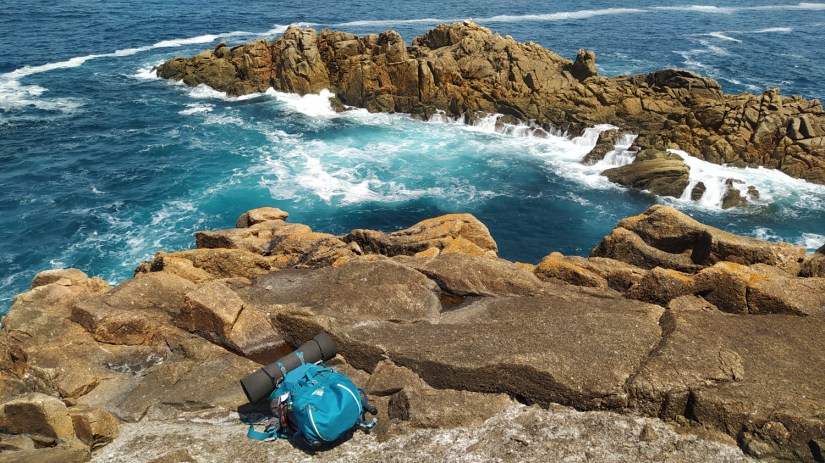
The first part of my journey was partly along the official Camino del Norte. Most of it was along the E9 long-distance route by the sea (see map, 244 km). The endlessness of the sea has called me for several years and I decided to heed its call. I honestly don’t know yet why it called to me.
From Laredo, I moved into the mountains on the Camino Primitivo. Many describe it as the most beautiful of all the Way of St James. It leads through mountains and valleys from Oviedo to Santiago (see map, 219 km). I had planned to end up in Lugo. This was because of the number of days to wander. Then I would take the train from there to Madrid. Fortunately, I had time to transfer to Santiago by bus. I also got my first look at the ocean. In the port city of A Coruña, I say goodbye.
Gear list or what to bring for hiking
My backpack weighed 9 kilos without water and food. Normally I carry around 12 kilos, which is too much. I wanted to sleep outside and cook my own food. As a vegan, I needed to have enough nutritious food with me, like red lentils and muesli or B12 tablets. If I had only hiked the allbergue, I would have been a few kilos lighter. Now I know again how to optimize my gear list a little more. You can check it out here (in CZ), including a retrospective evaluation of each item. For the most part, I’m basing my gear list on Viktorka’s gear list. If you have any tips on how to streamline my gear list, I´m all ears.
Walking
Walking is something very natural for me, my favorite movement. I manage to become aware. I engage all my senses. I find myself in a repetitive rhythm of steps that ground me, without thinking.
Walking for four weeks in rugged terrain can be tough with a heavier pack. You go up and down, over and over again. I soon got stronger and don’t remember getting out of breath, but that’s surely just a bias. I protected my knees with bandages to strengthen and support my joints. Poles are essential for engaging the upper body. They add security and stability on more challenging terrain, like the frequent rocky trails in the woods. As a result, neither my feet nor my back hurt.
I had only one blister in the first fifteen days. It was on my hand – from the poles. The first one appeared on my toe. I quickly put a plaster on it. I practically didn’t suffer at all. I’m pretty sure I owe that to my light, airy, and quick-drying Salomon OUTBOUND PRISM W running shoes and Bridgedale Storm Sock LW Ankle waterproof socks (not an advertisement!).
Vegan in Spain: food and water
It was my first time traveling as a vegan. My first big test. If I’d been vegetarian, it would have been much easier and my wallet would have been much lighter (there’s a patisserie on every corner!). In any country, it’s essential to know how to say meat (corne). You should also know how to say milk (leche) and eggs (huevo) in the local language. And that „sin“ is „without“ and „con“ is „with“.
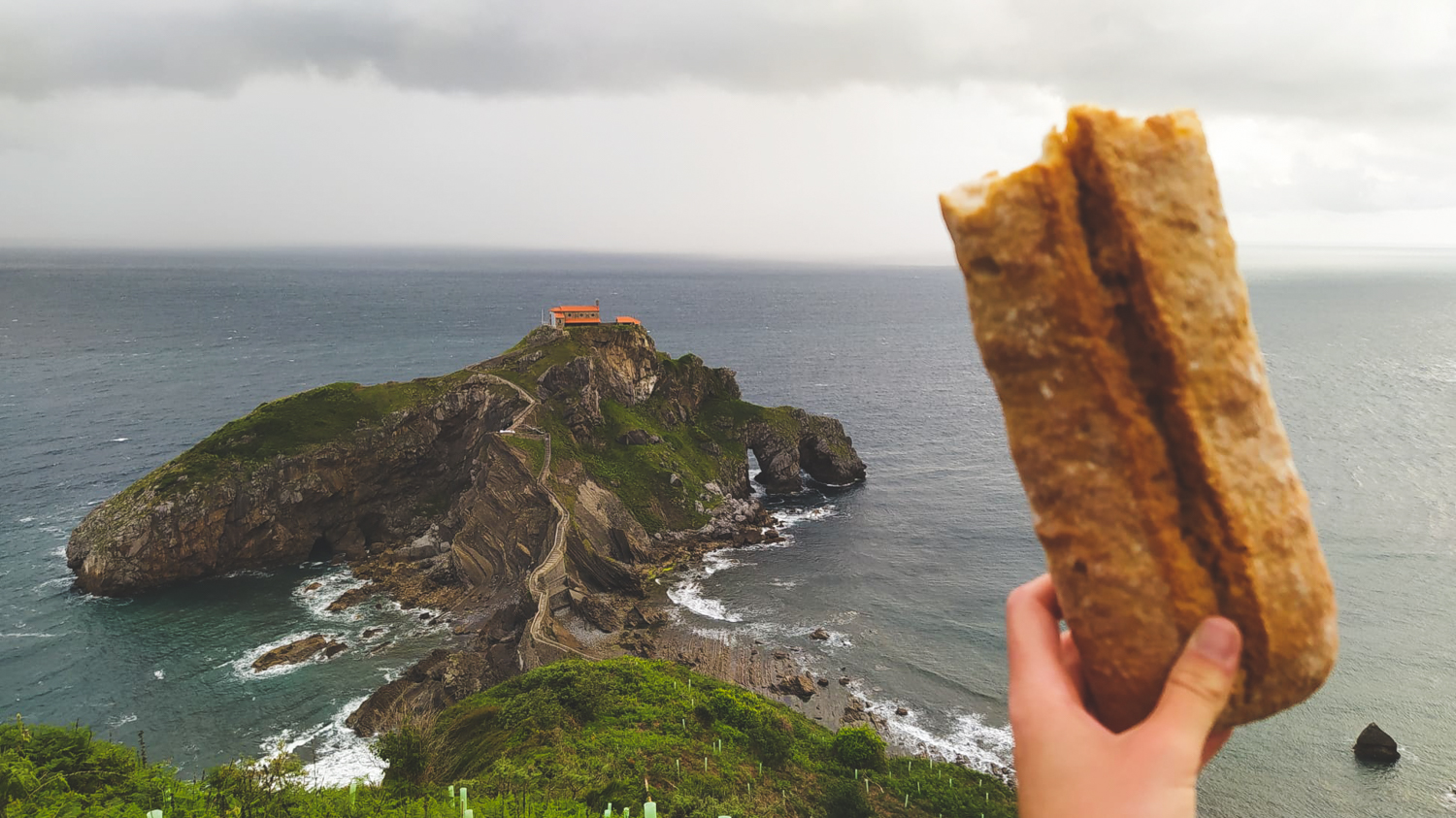
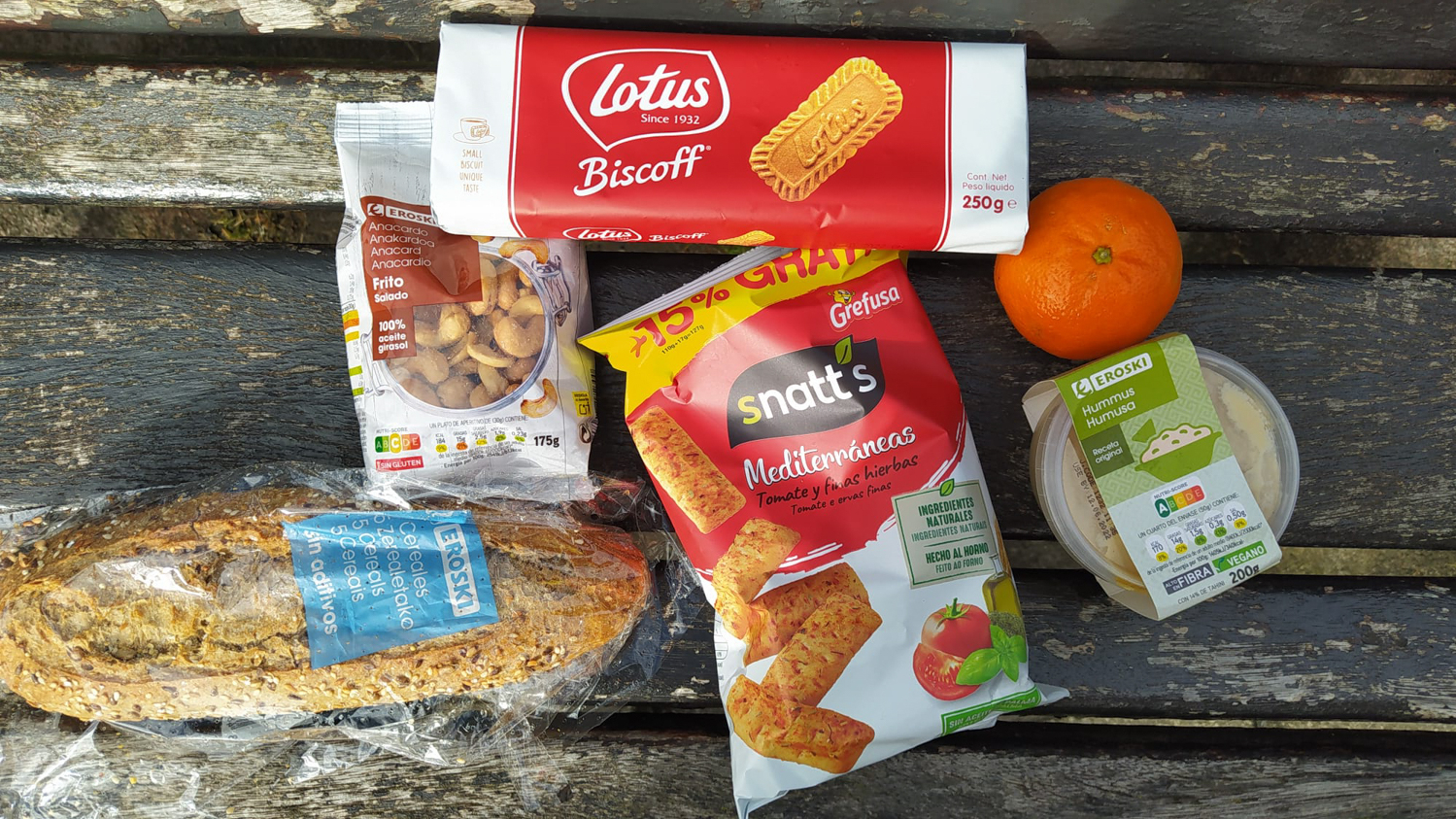
I wanted to make sure I was eating nutritiously. To do this, I brought a muesli mix with nuts, dried fruit, chocolate, seeds, and protein powder (about 800g). It was in an oblong box comparable to Mixit’s to start with. In Santander, I got 500g of red lentils from the Eroski chain. I can buy smaller quantities of lentils at a no-package store. I always find this type of store in a bigger city. They also had good hummus at Eroski, which I ate with bread.
Unfortunately, once I left the Basque Country („This is no France nor Spain!“), the shops and variety changed. Along the Camino Primitivo, for example, it was impossible to get red lentils (but by then I was refusing to eat them over and over again), only in a specialist organic food shop (e.g. Organic in Oviedo, where the route starts). Hummus was, in my opinion, the best in the Alimerka grocery store chain, but I gave up on that too. I couldn’t find any good hummus in Galicia.
In the bigger towns you can always find a health food store that sells tempeh, seitan, tofu, etc., but I think they’re pretty overpriced, and the bigger grocery stores tend to have more tempting offerings that I know from the Czech Republic, like vegan burgers, soy bits ala chicken, Violife spreads, plant milks and yogurts (they only sell them in fours), etc. You can always get Lotus or Oreo or dia cookies to taste.
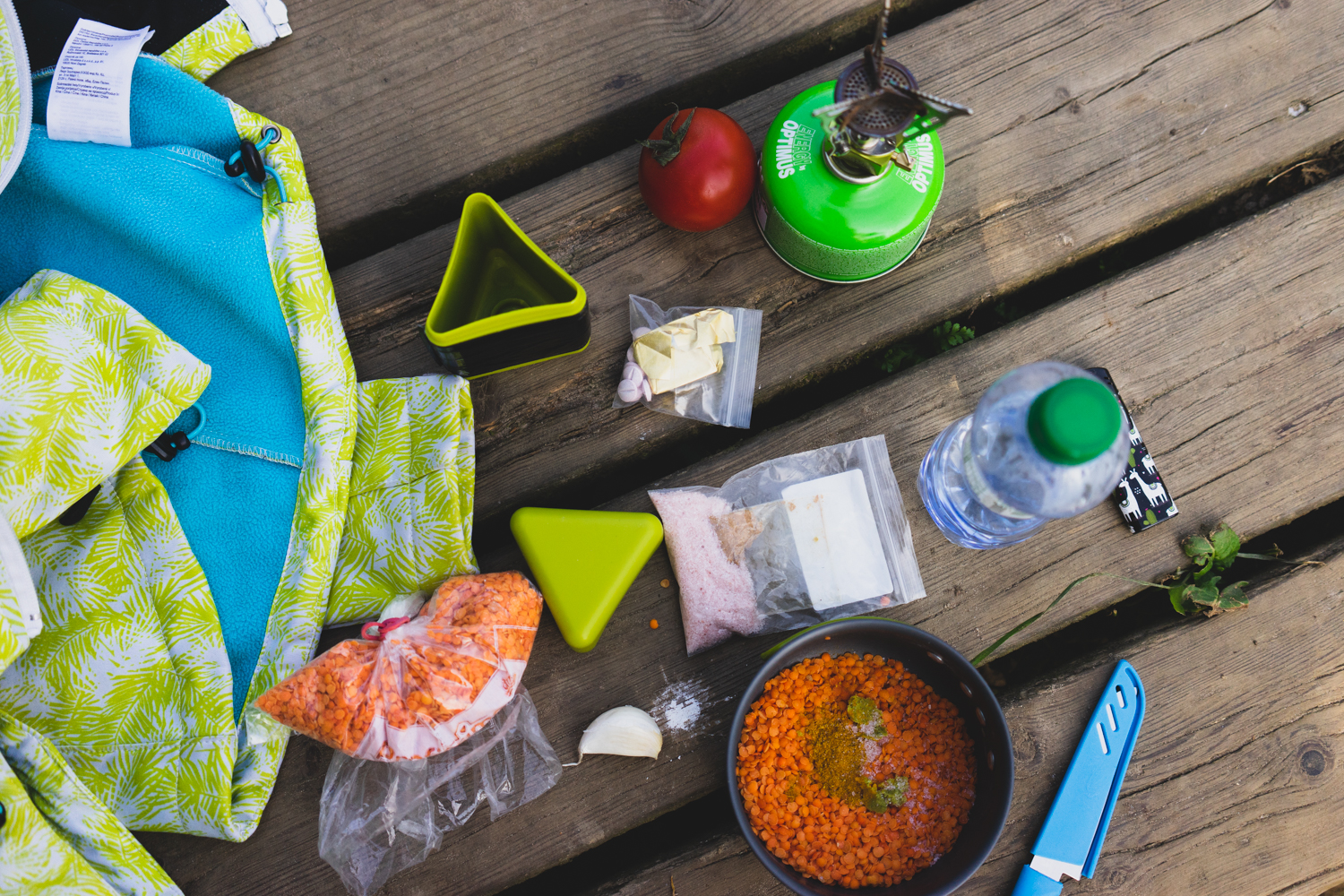
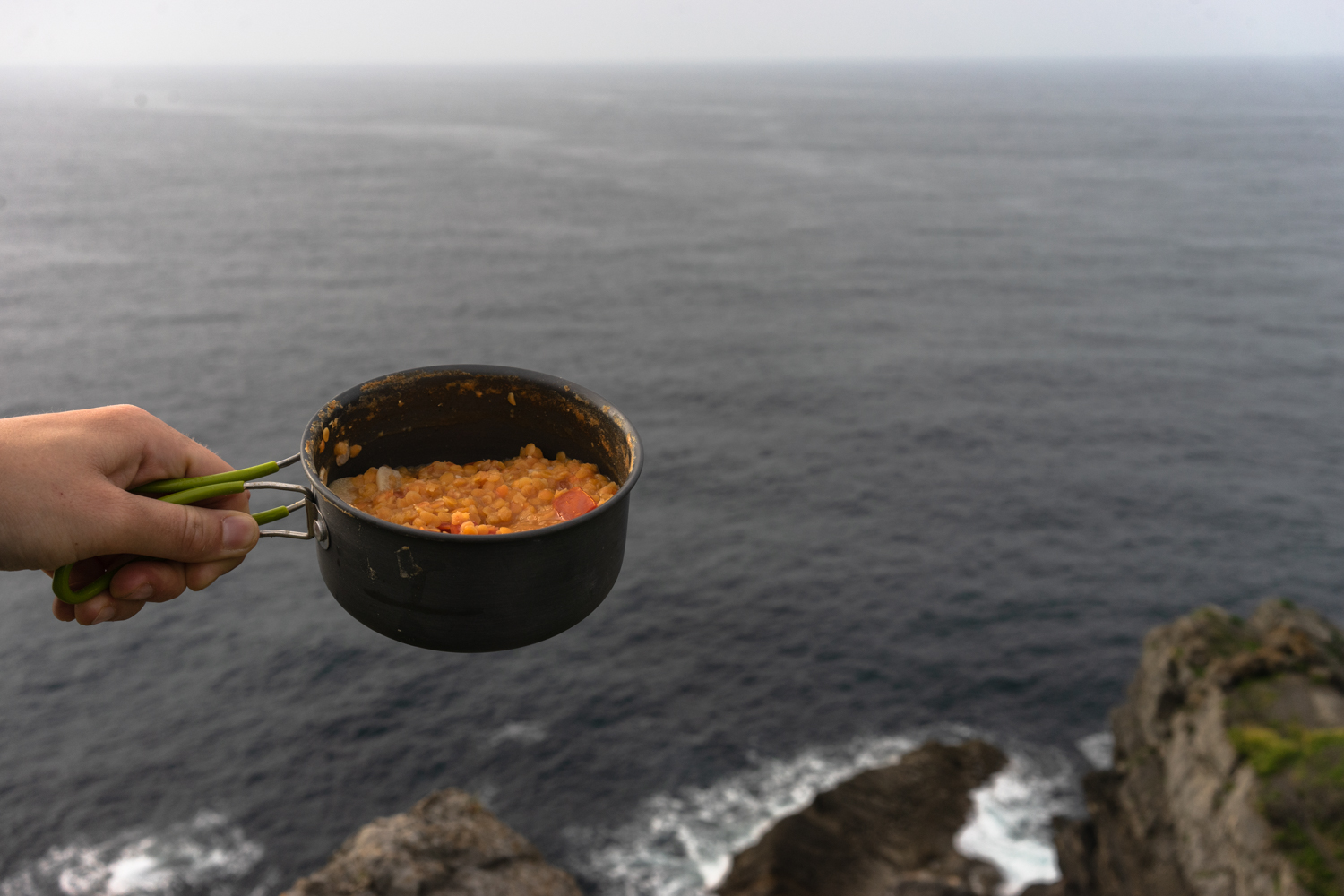
You may ask why I always cooked red lentils? Because it’s quick. The first fifteen days I slept outside and didn’t have the option of cooking on the stove, so I needed to save the bomb. Plus, it’s pretty convenient, red lentils are delicious, you cook them in fifteen minutes and they’re filling. It was my daily ritual to find a place with a beautiful view and stay there for two hours, cook and spend a nice time and meal. Plus, you don’t have to bring too many ingredients, even just lentils and salt are enough, I supplied vegetable broth.
Buying the necessary groceries at the store is not a problem in itself. Every day you walk through smaller or bigger towns where you can find a lot of things (on the Camino Primitivo you have to watch out for siestas). There are also semi-finished goods in the shops. If you’re sleeping in an albergue, you can cook with friends – I speak for the Camino Primitivo route because I only went on the Camino del Norte briefly and there were no stoves in the allbergue, not where I slept. For me, it’s good to have a strategy to eat nutritiously, even if the grocery store offerings are small.
I don’t have much experience with eating in restaurants. I’ve always found something in bigger cities, but I’ve tried to save money, lunches aren’t the cheapest. The HappyCow website helped me, where people post tips for restaurants with vegan, vegetarian and vegetable options. There’s also an app by the same name.
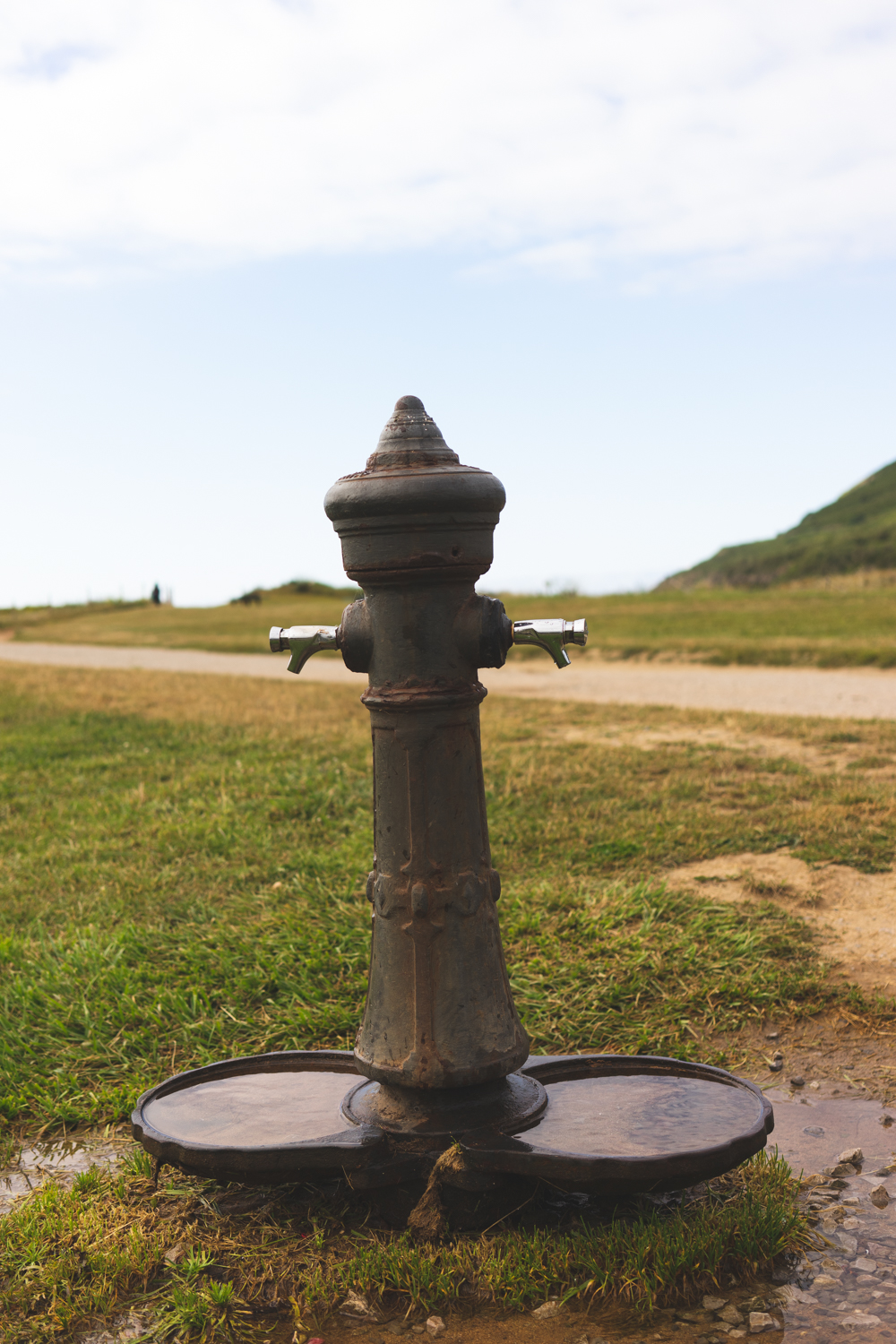
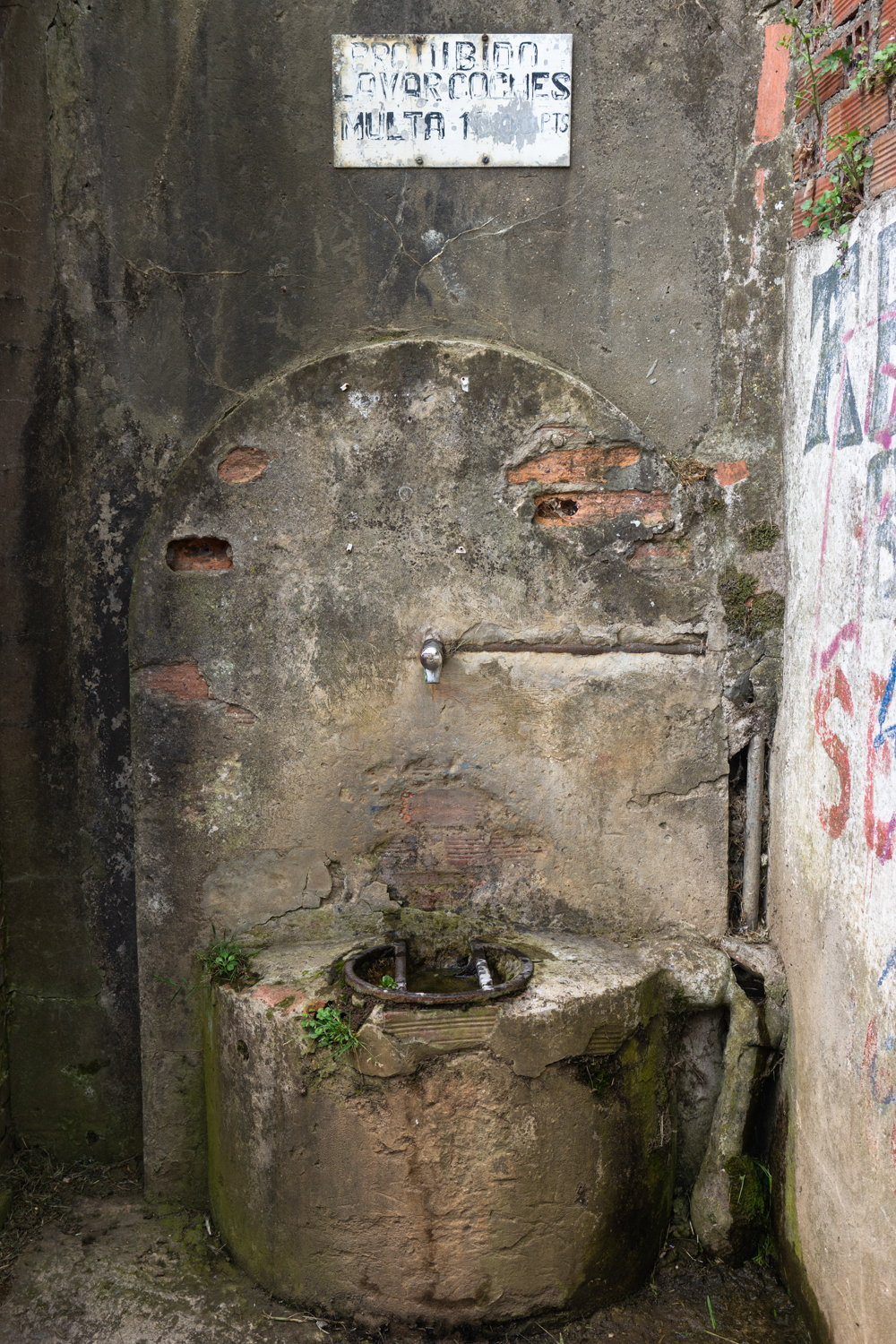
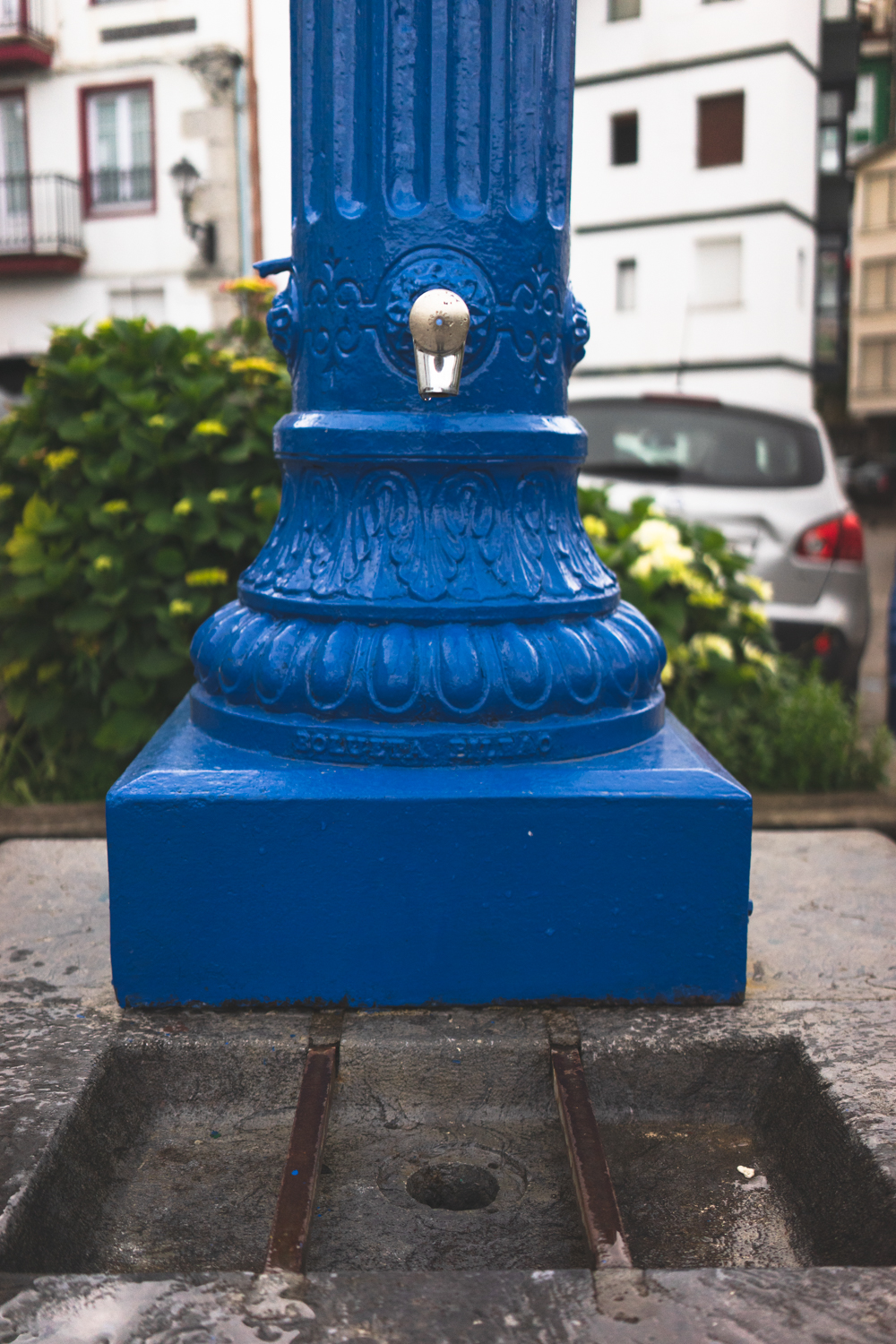
I can only say one thing about water: it’s everywhere. Whether on the official camino route or on the long-distance route, you will come across a publicly available source of drinking water more than once a day. Always at the church, but usually at other places in the village and town or just along the way. It is enough to take a liter and a half of water, or even less, and refill it. I checked the available sources via the mapy.cz app, which I like to use the most. The water source has a tap icon with water drops, and I’ve never had a situation where the water wasn’t actually there, or the source dried up like the springs in the Czech Republic. Just keep in mind that my observation took place in late May/early June, when it’s not that hot yet.
Budget
I have to preface this by saying that I’m very frugal and don’t like to spend on extraneous things. The urge to spend as little money as possible didn’t pass until the third week, when I had company, so I got used to paying something every day. I spent very little, some days not at all, for the first fifteen solitary days, which was also influenced by the fact that I had lost my credit card and only had cash.
In addition to being thrifty, I keep careful records of my spending. That way I know exactly what I spent how much money on, which helps me to optimize my budget in the future and have a realistic idea of how much such a trip costs. You can look into my expenses here (in CZ). That’s a summary without individual items. It’s just for a rough idea, as everyone travels differently, has different financial capabilities (and isn’t a cheapskate like me) or doesn’t sleep out. But if you plan to travel like I do, sleeping half outside, half inside, cooking, etc, this may make sense to you as a guide.
Tip: even the cheapest allbergue (5-10 euro) are usually nice. You’ll also often find allbergue marked with the D (donation) symbol, which means you can give as much money as you want. At the same time, these allbergue are usually the best ones, where you also get dinner and breakfast and feel really like at home (on the Camino Primitivo, for example, I loved the allbergue Casa Mandala, run by a very nice Slovak-Spanish couple with kids), so you donate more money.
Sleeping outdoors and accommodation
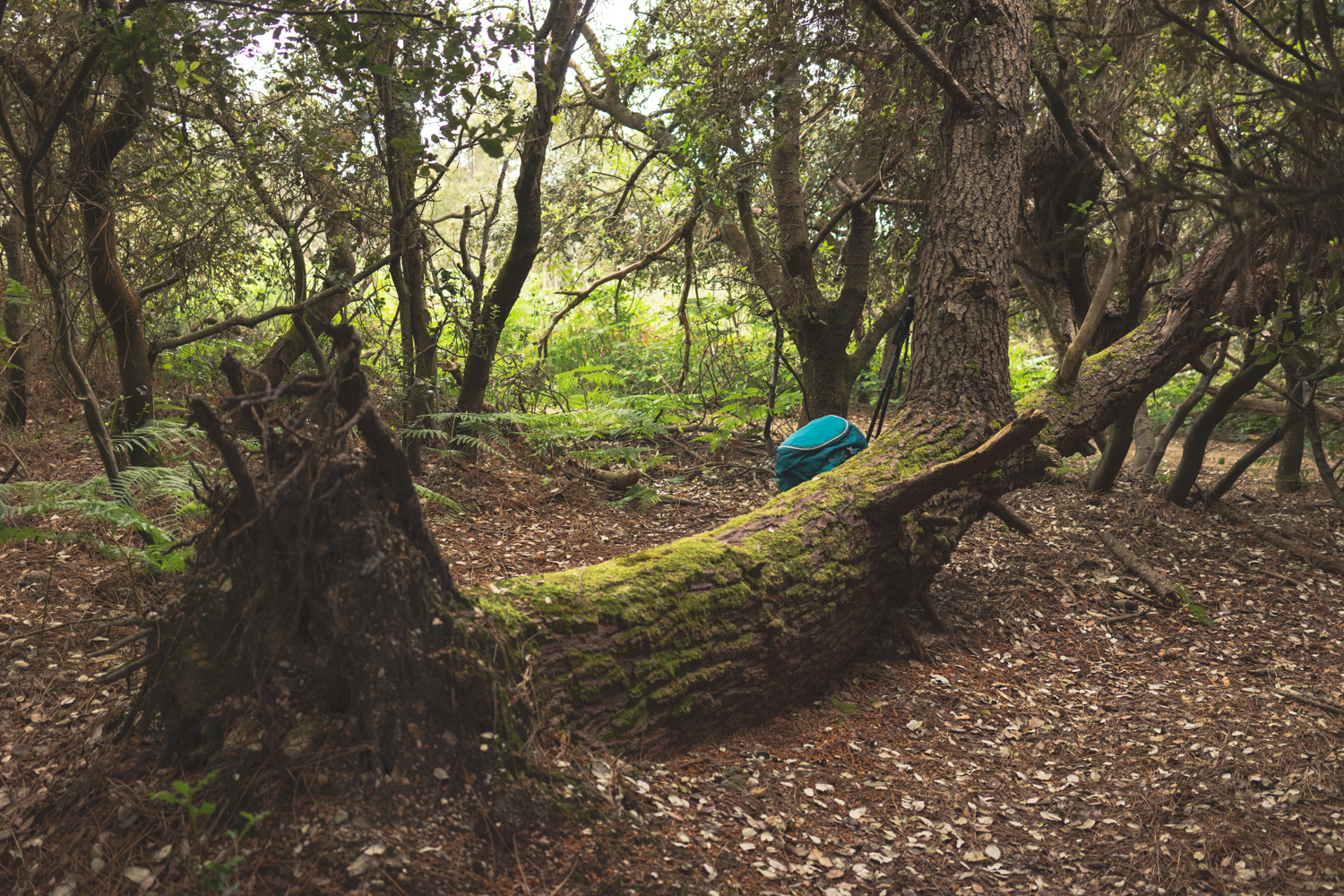
Finding shelter was the most frustrating part of the whole trip, and it’s not just my experience. Sleeping under a tarp is not as easy as I thought it would be on these routes. For one thing, it’s outlawed, but I don’t worry too much about that because I’ll just leave behind the bare grass. Above all, I missed flat areas. Twice I slept on a slight slope, which is not pleasant. I missed woods or land without cows, horses, sheep, and goats. As a woman, I wanted to be far away from civilization where I hide undisturbed. Two friends of mine had not dealt with civilization. They walked ahead of me for a week. They were men and were not alone. But even I, over time, gained enough courage to defy being a pilgrim and sleeping in more visible places.
At the same time, I gained confidence and inner peace because I knew I could always find a place to sleep. I decided there might come a day when I would have to walk through the night. I might have to rest somewhere leaning against a tree. For at least one night, I could do that and not be so stressed about not finding a place to sleep.
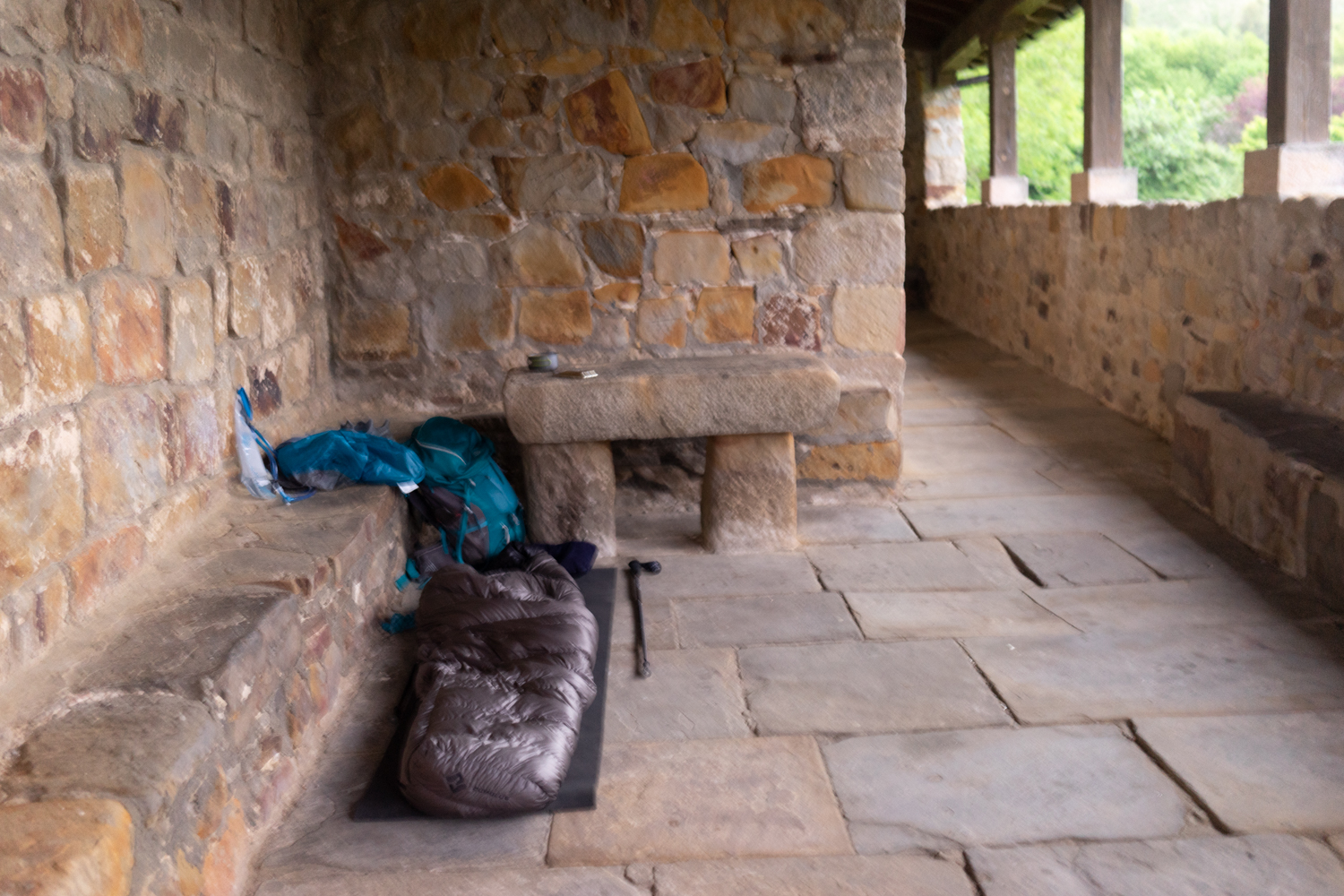
That’s also why I made a note of all the places along the way where I could sleep comfortably and hopefully safely. If you are going to walk the long distance route around the sea yourself, or want to try sleeping outside, I can send you the exact GPS coordinates of these places with comments. I have occasionally used indoor churches where I didn’t have to fire up the tarp.
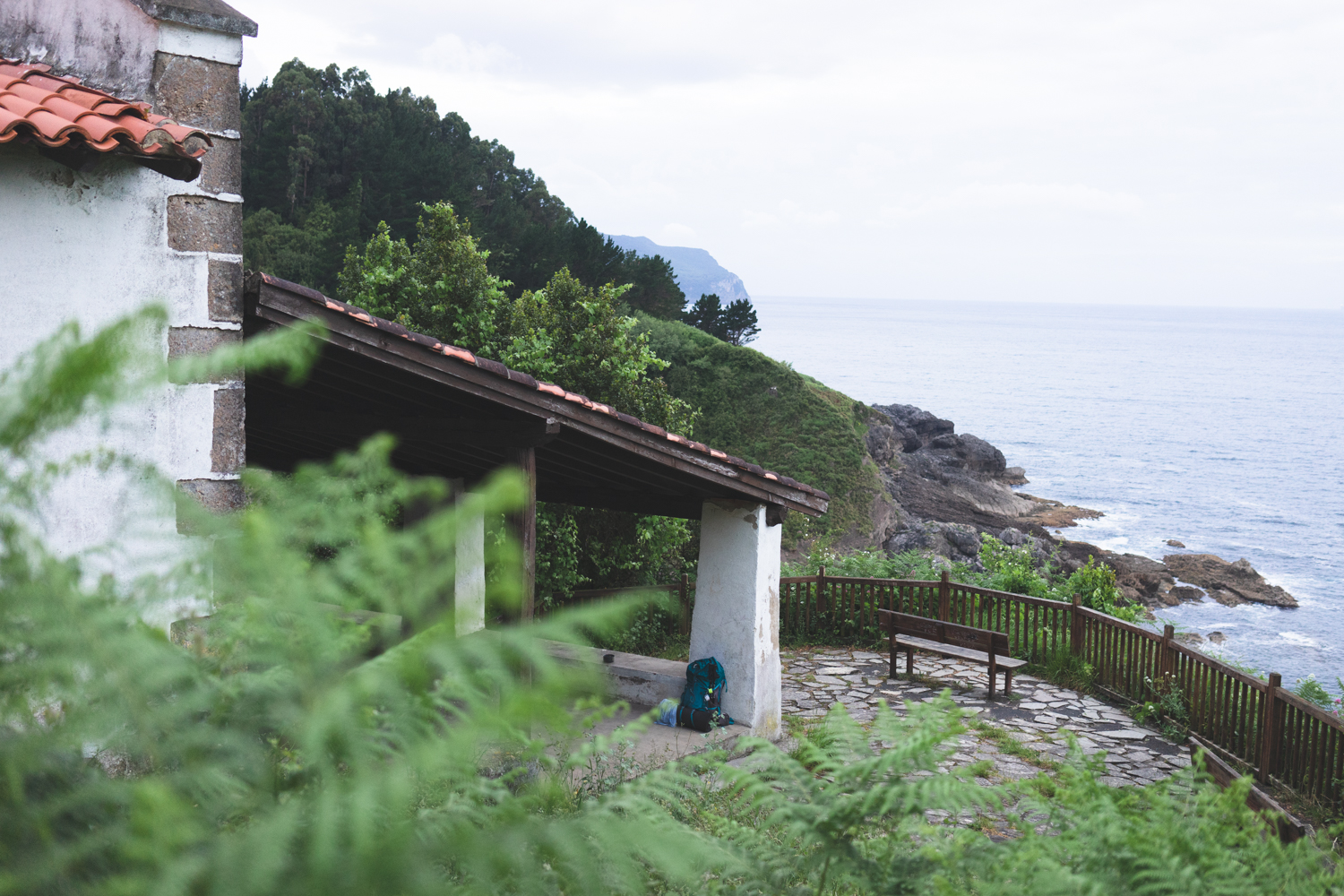
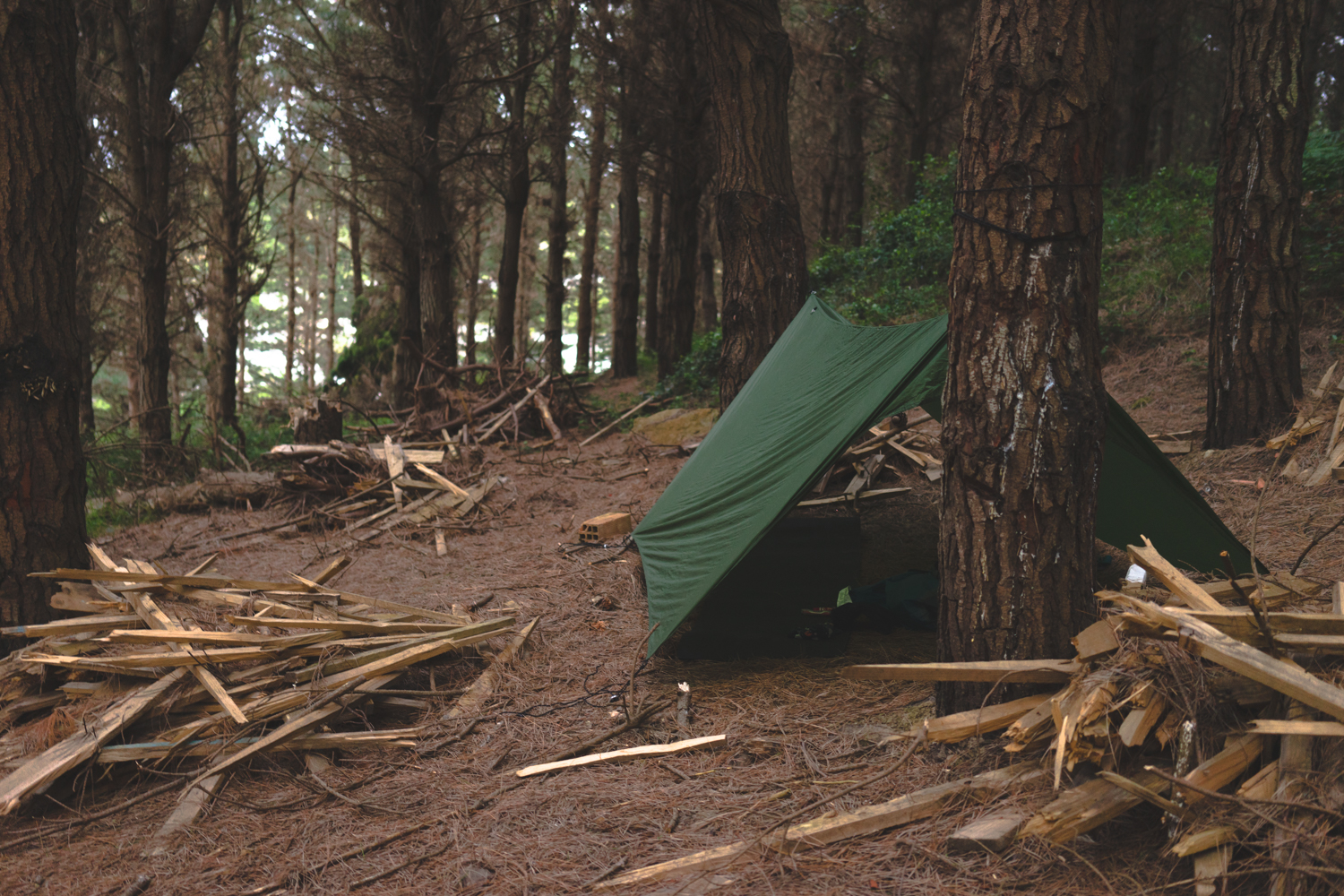
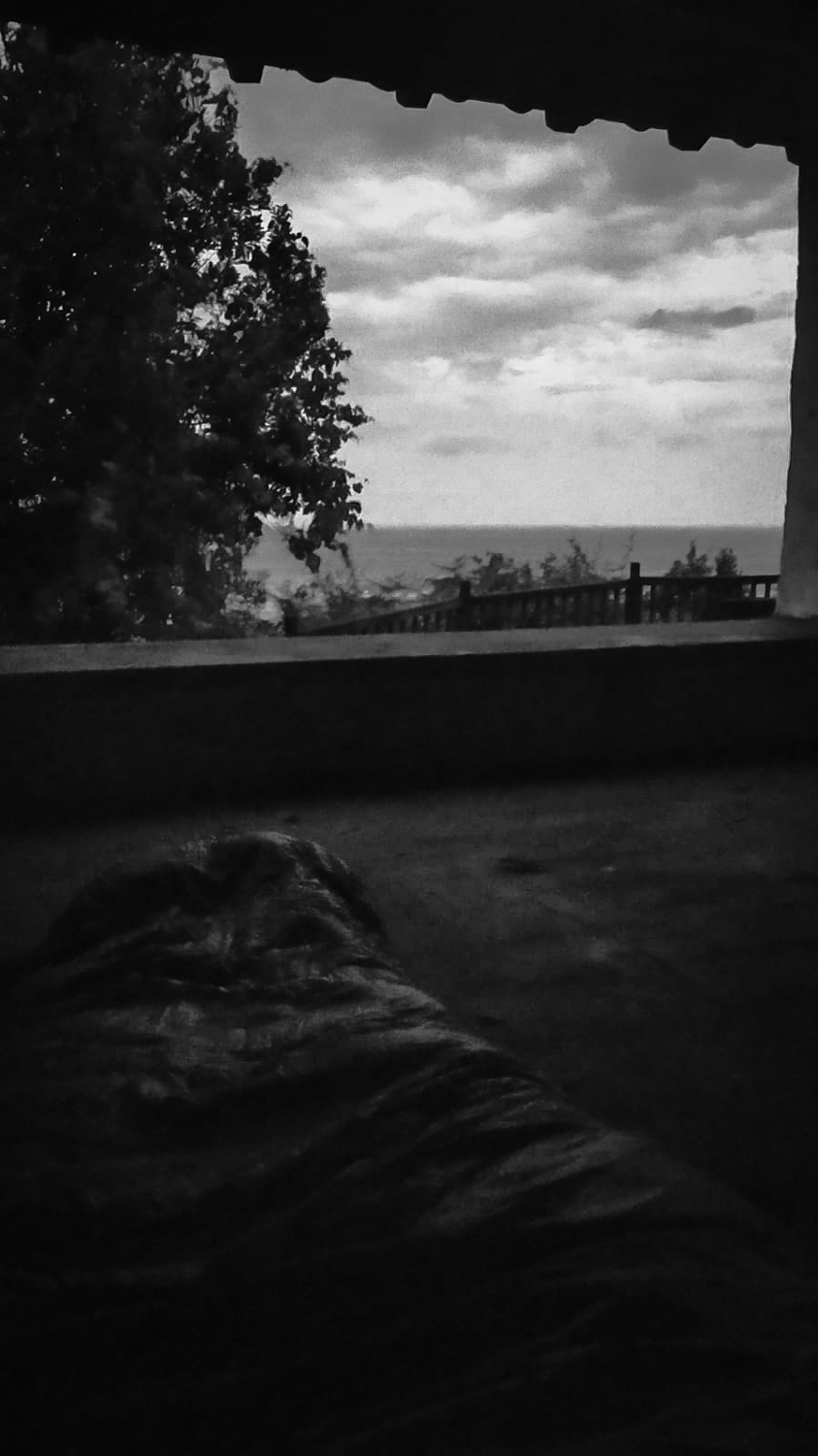
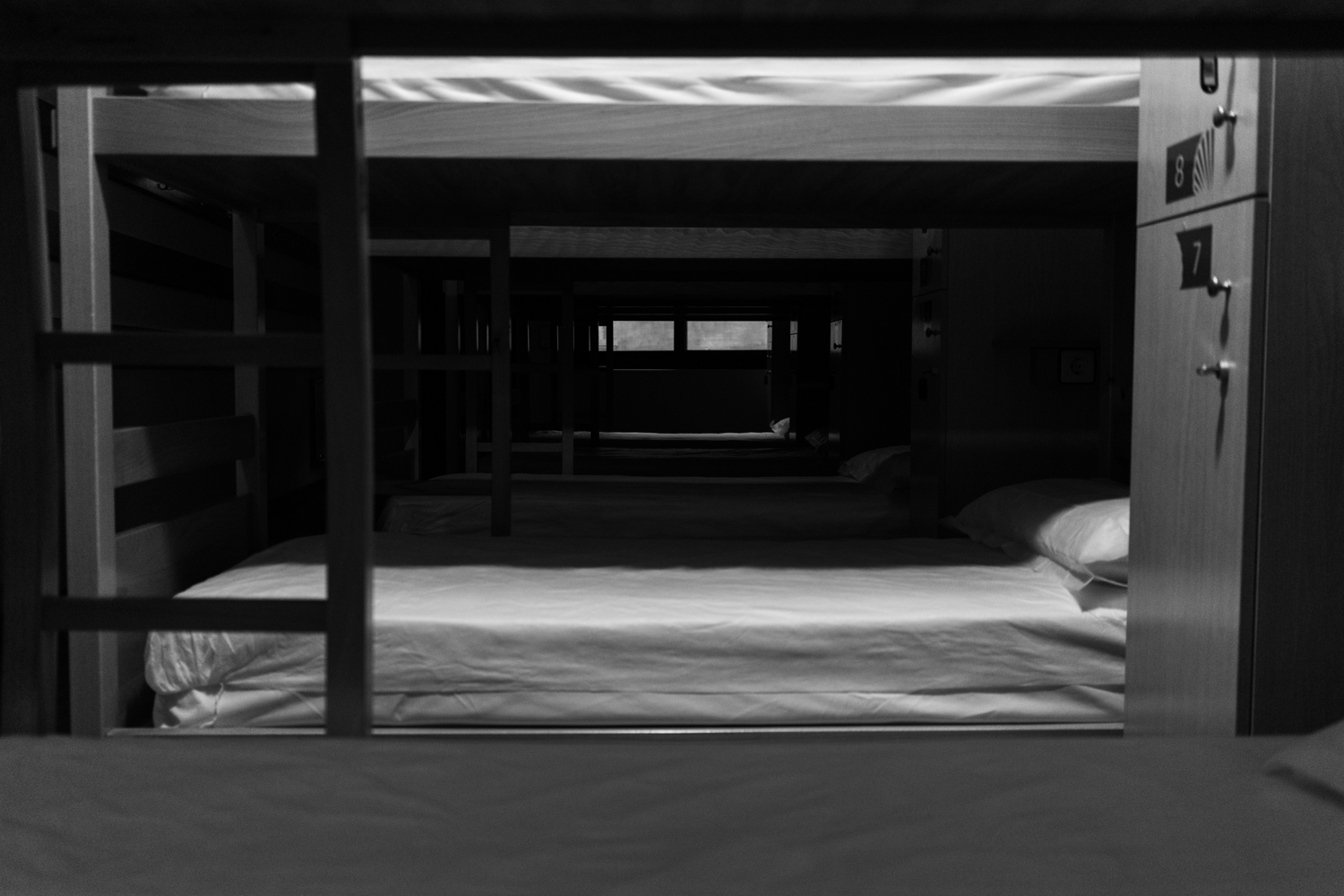
Frustration is also present in allbergue. If you don’t book a place in advance (because you don’t want to deal with it, for example, or you want to walk as long as you want and you don’t know where you’ll end up), it’s not certain that there will be room for you. If you have a looser budget, you simply use a more expensive option or a private room, if you don’t want to spend too much money, you need to arrive at the place at the opening time, which is usually between 1 and 3 p.m. But then you are unknowingly in a bit of a hurry along the way, you have a reminder in your head that you should arrive at a certain time, and uncertainty about whether you will have a place to sleep or whether you will have to compromise.
I know this more from other people’s experience, but even I felt the pressure at times, especially when the price difference between the allbergue and other types of accommodation was too great. I felt most comfortable when I had my accommodation booked, which was only if I was traveling with someone who had sorted it out. Then I could dawdle at will and take long breaks, which I love. Sometimes I managed to keep my composure in a „we’ll see“ sense, plus I could always sleep outside. I have a friend who anxiously took the train back from Deba a few kilometres away and spent 50 euros on accommodation because it wasn’t cheaper far and wide. He was traveling in August, it may be necessary to book an allbergue in high season.
Here I’d like to recommend a good app just for finding allbergue along all the routes, including other gadgets like elevation gain etc: Camino Ninja App. And the frequently updated Gronze page, where you can also find the number of beds, opening hours, price, address, phone, email, photo etc for each allbergue.
Hygiene
If you sleep in an allbergue, you have nothing to worry about. If you choose to sleep outdoors, there are a few options for keeping yourself fresh. The sea is icy in May, but you’ll find public showers on every beach. Here and there you’ll find more secluded water sources or toilets, where I occasionally wet my towel and wiped myself thoroughly.
I remember the day I crawled sweaty to a abounded church and discovered a water source. There was only one house, and it was at the bottom of a hillside. The relief of being able to wash my clothes and cook a good lunch (I still liked lentils). Generally when sleeping outside you appreciate most things a little differently than when sleeping under a roof.
Charging your mobile phone
You can see by the gear list that I carry a power bank. It’s not essential. If you go to a cafe or restaurant during the day, you can charge your phone there. If you only sleep in the allbergue and walk the official marked route, you have nothing to worry about. My favorite place to charge was the library because I could also read for the first time in a long time and see local men and women reading.
Route signs
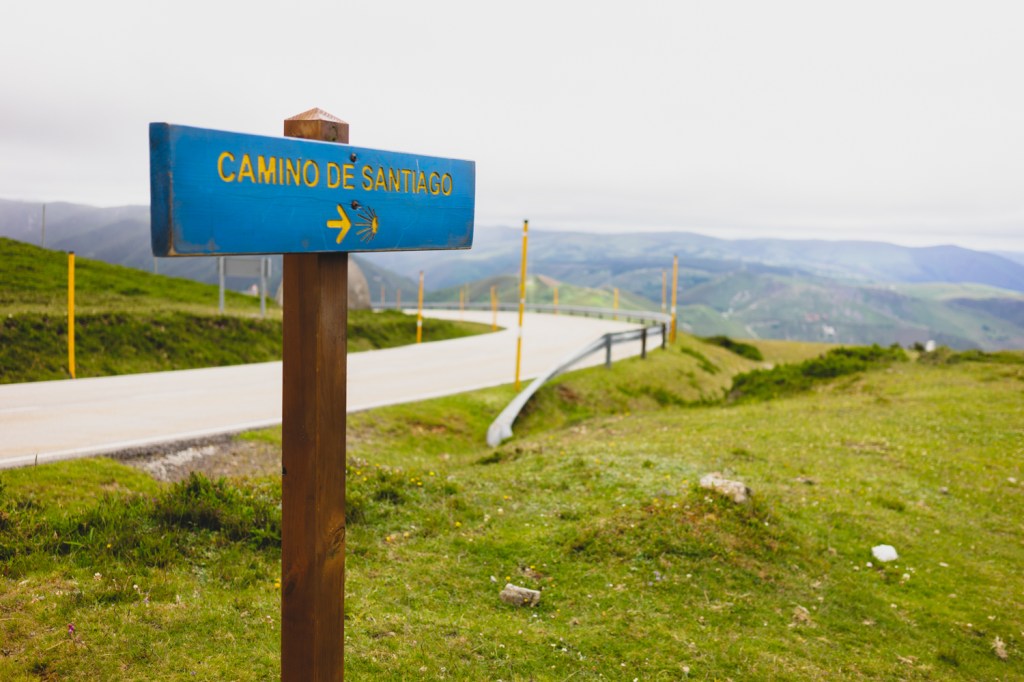
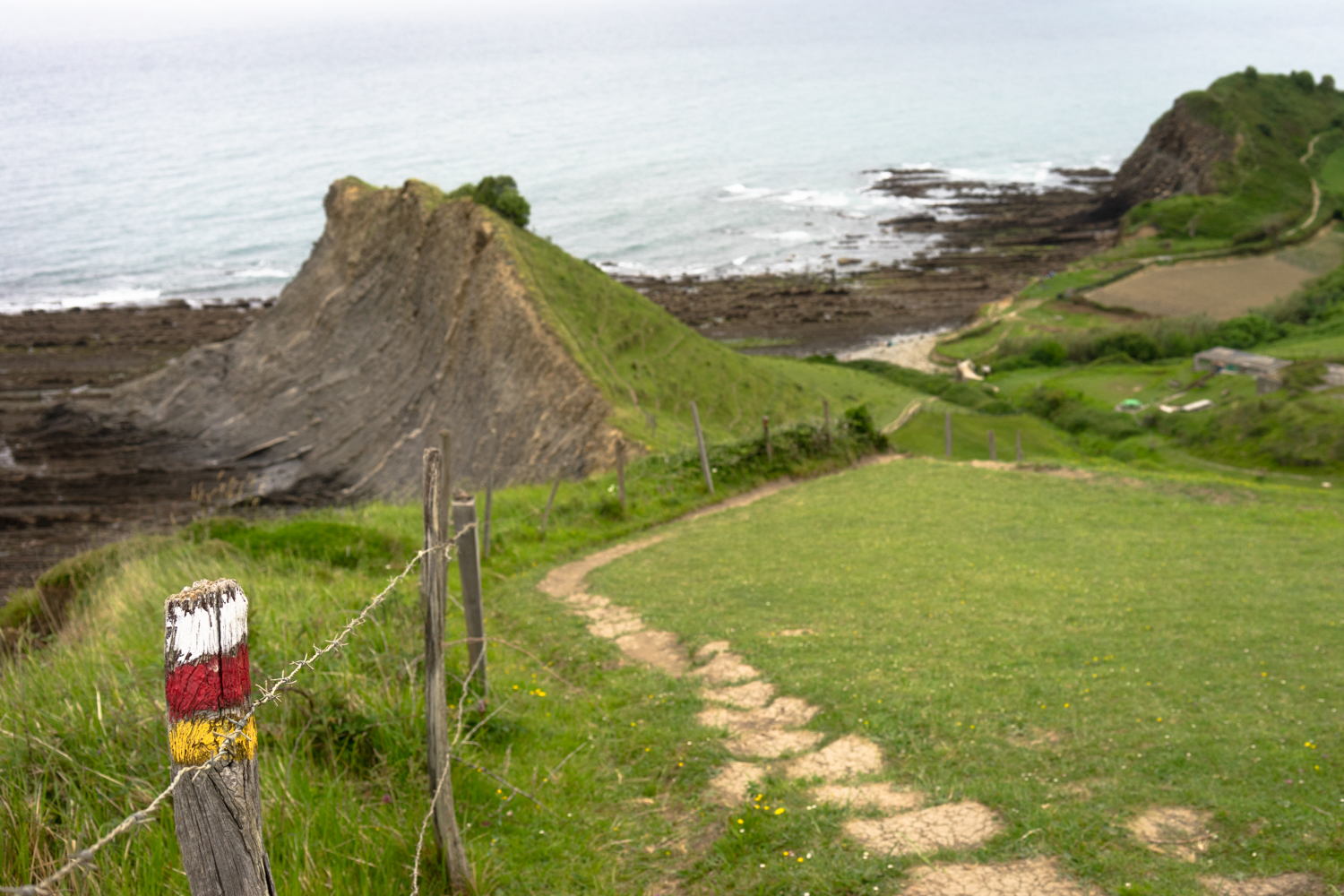
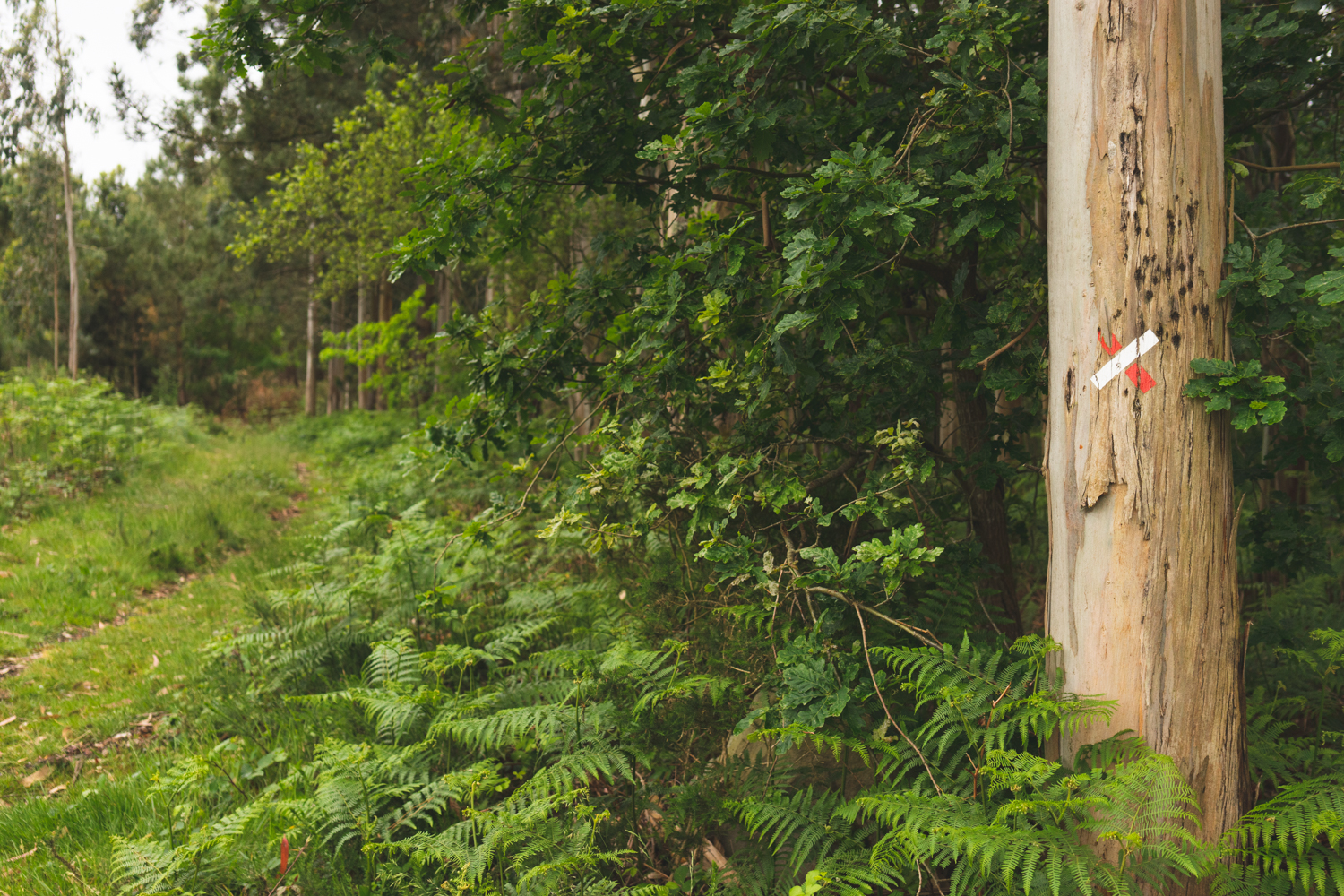
The typical yellow arrows, shells on the houses and on the ground or the camino symbol will guide you along the official camino route. I can only speak for the Camino Primitivo where the markings were reliable, especially in Galicia.
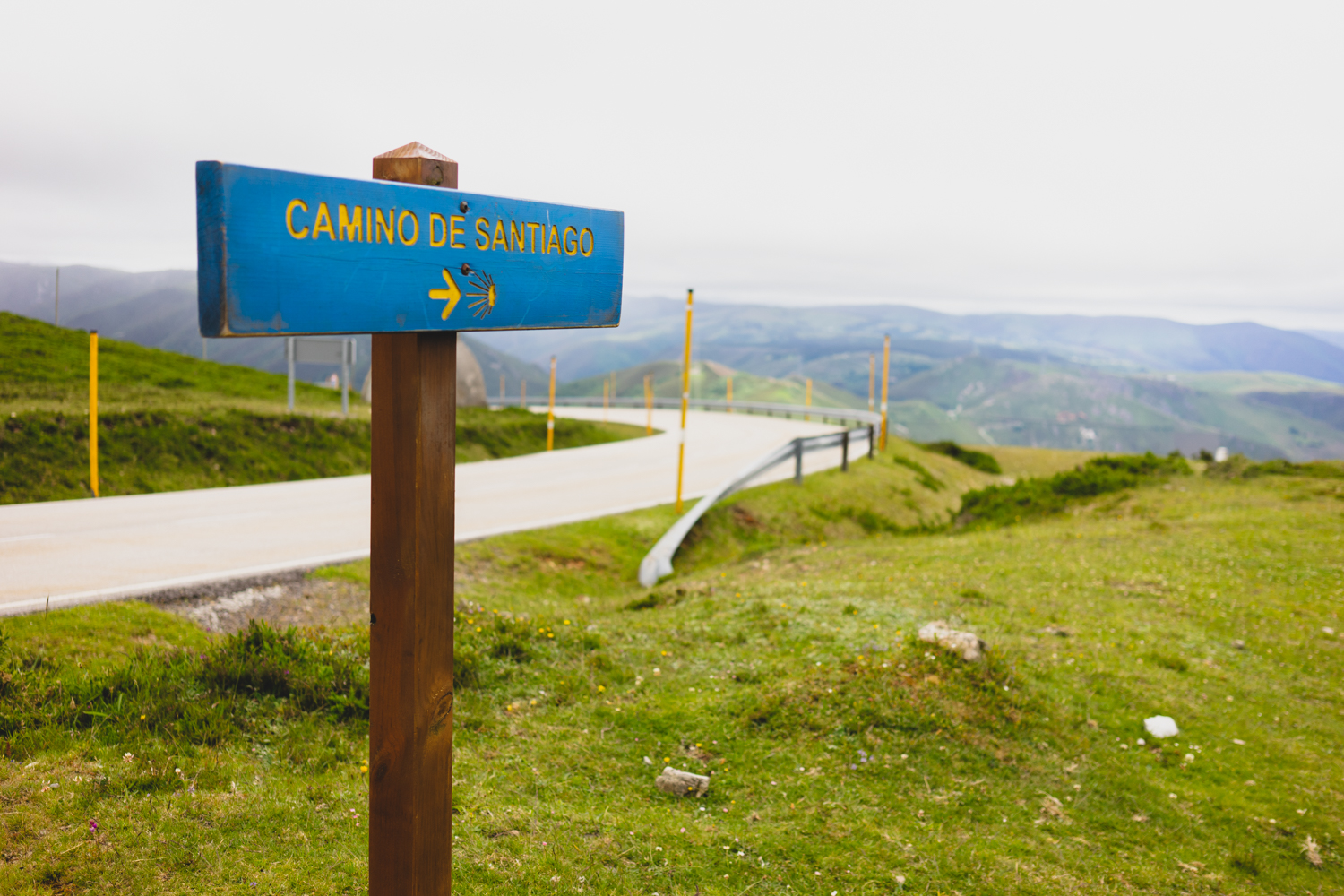
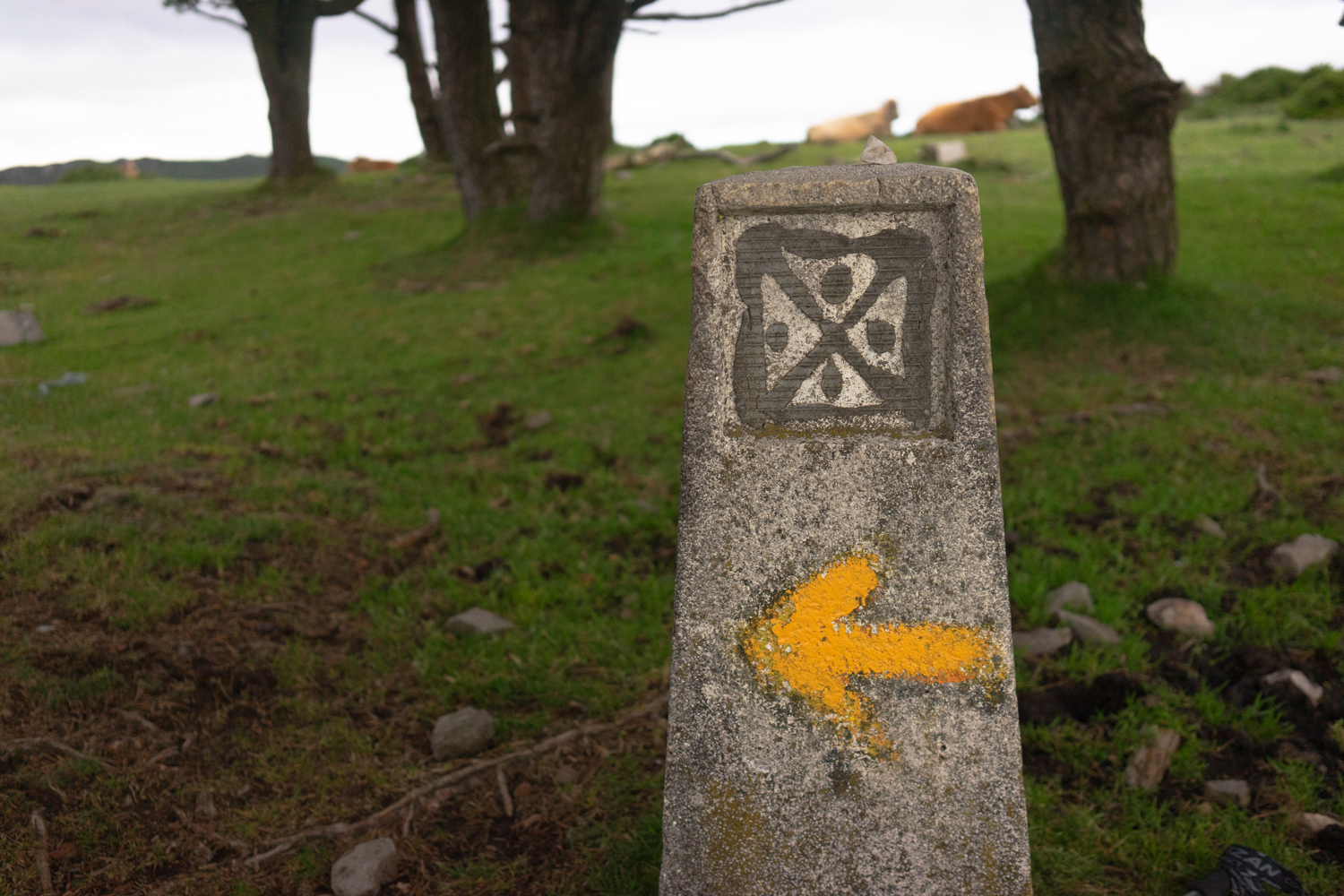
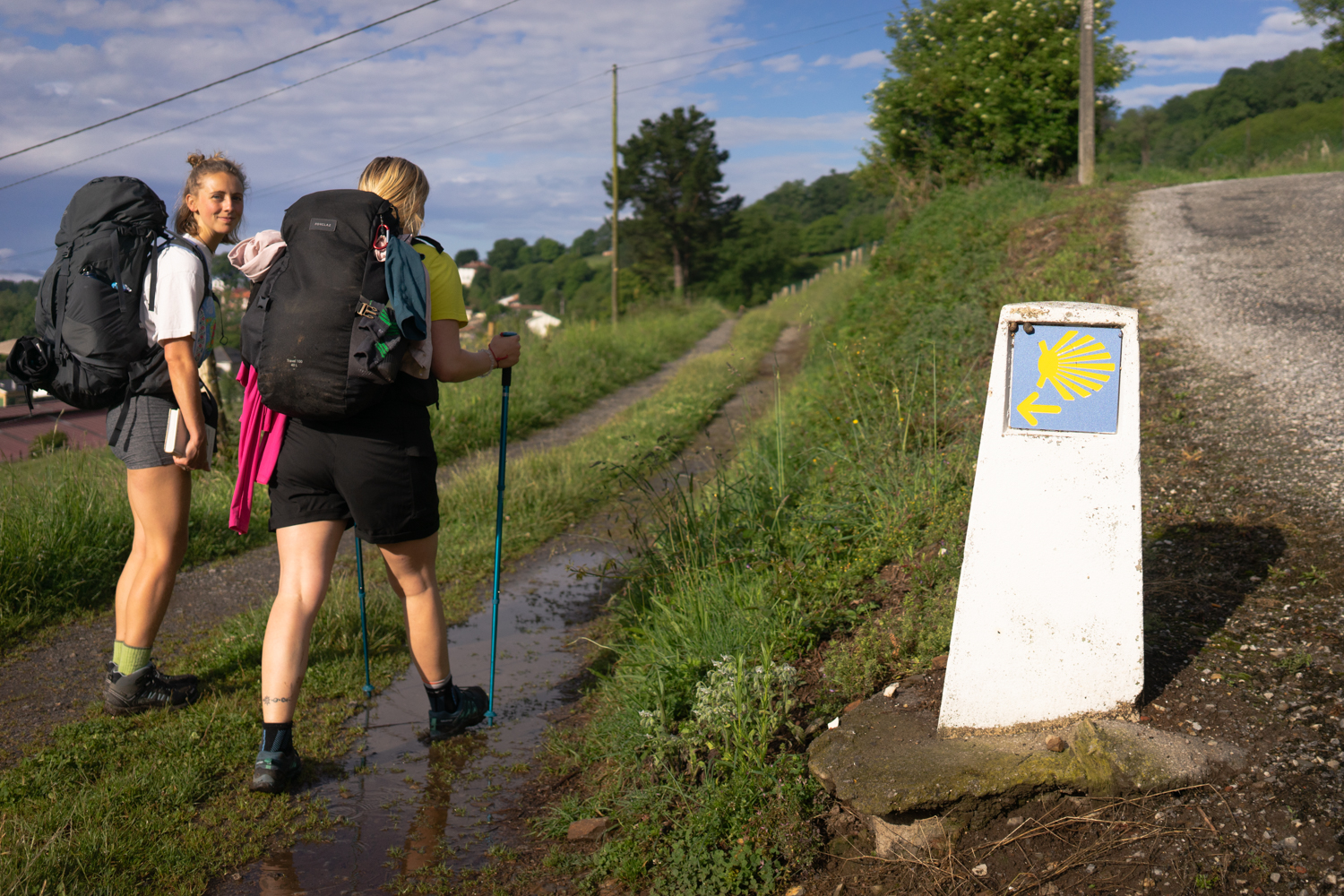
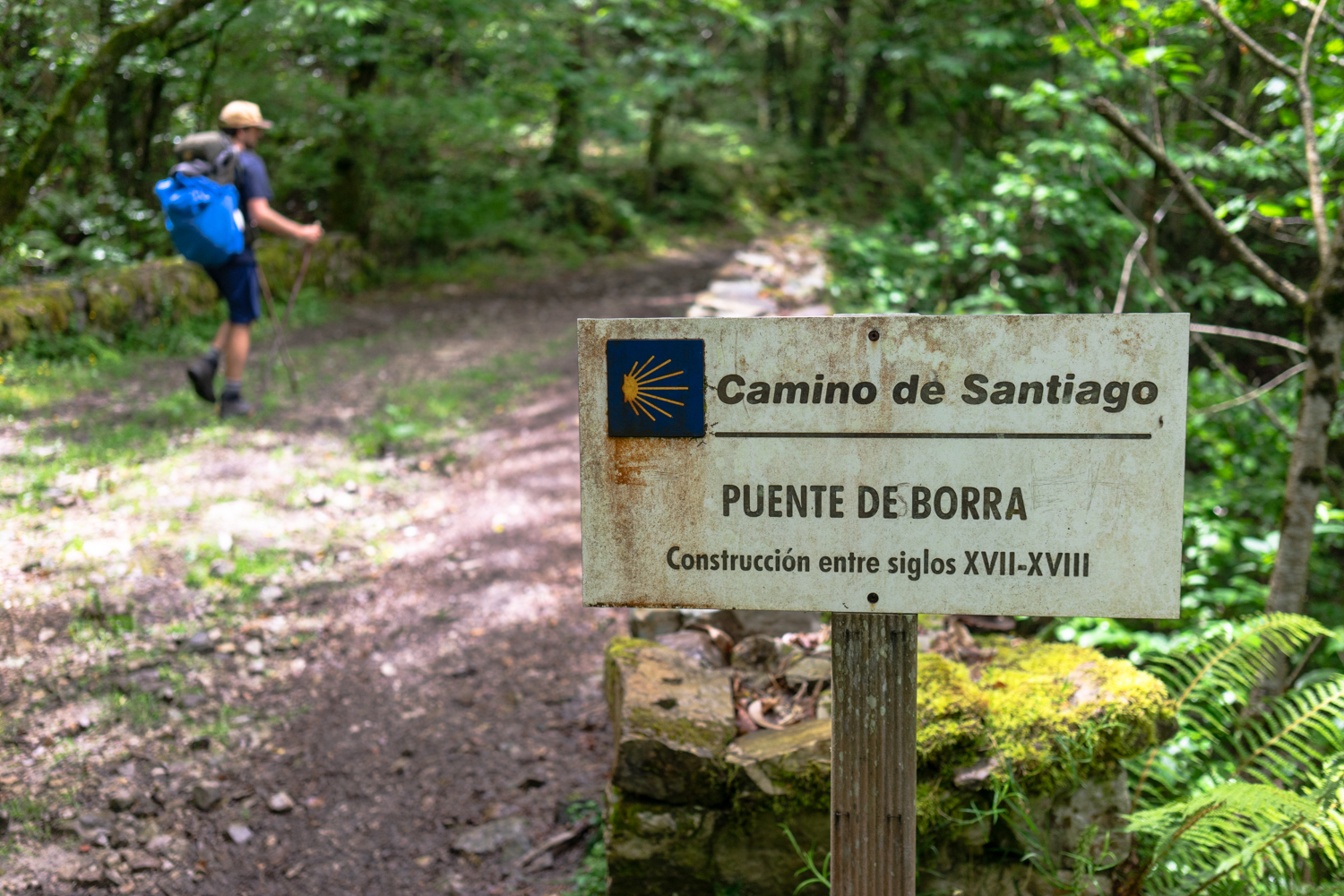
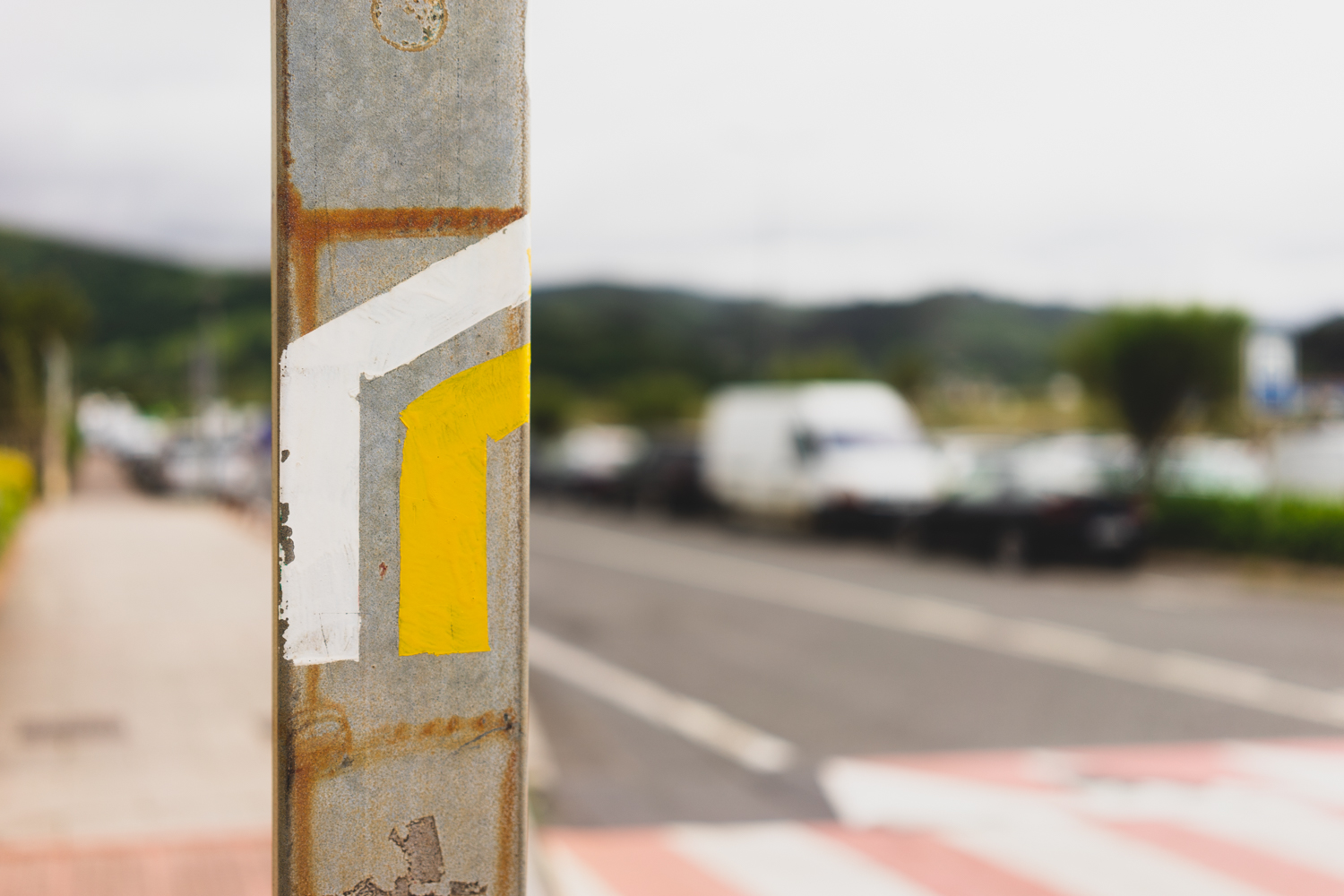
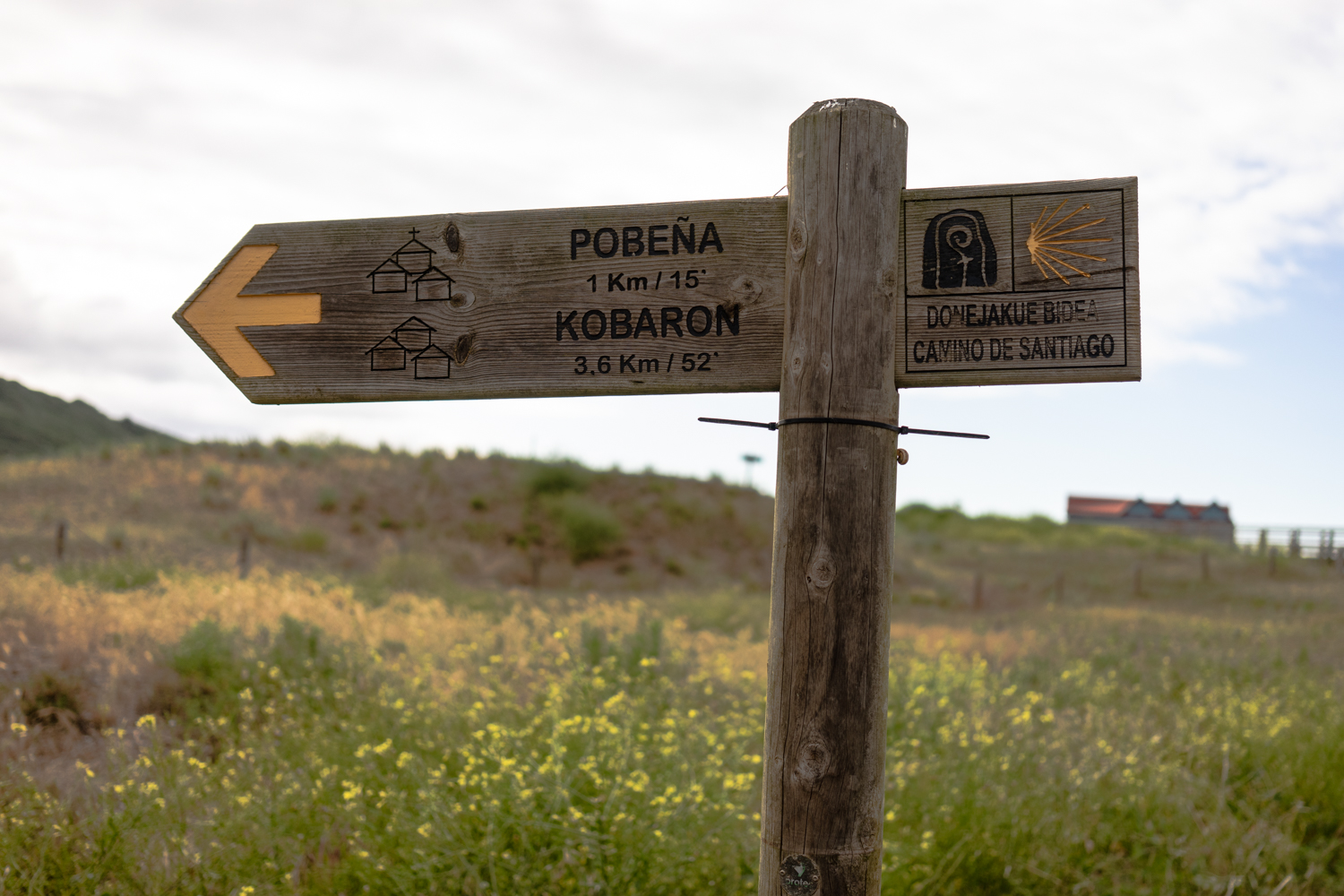
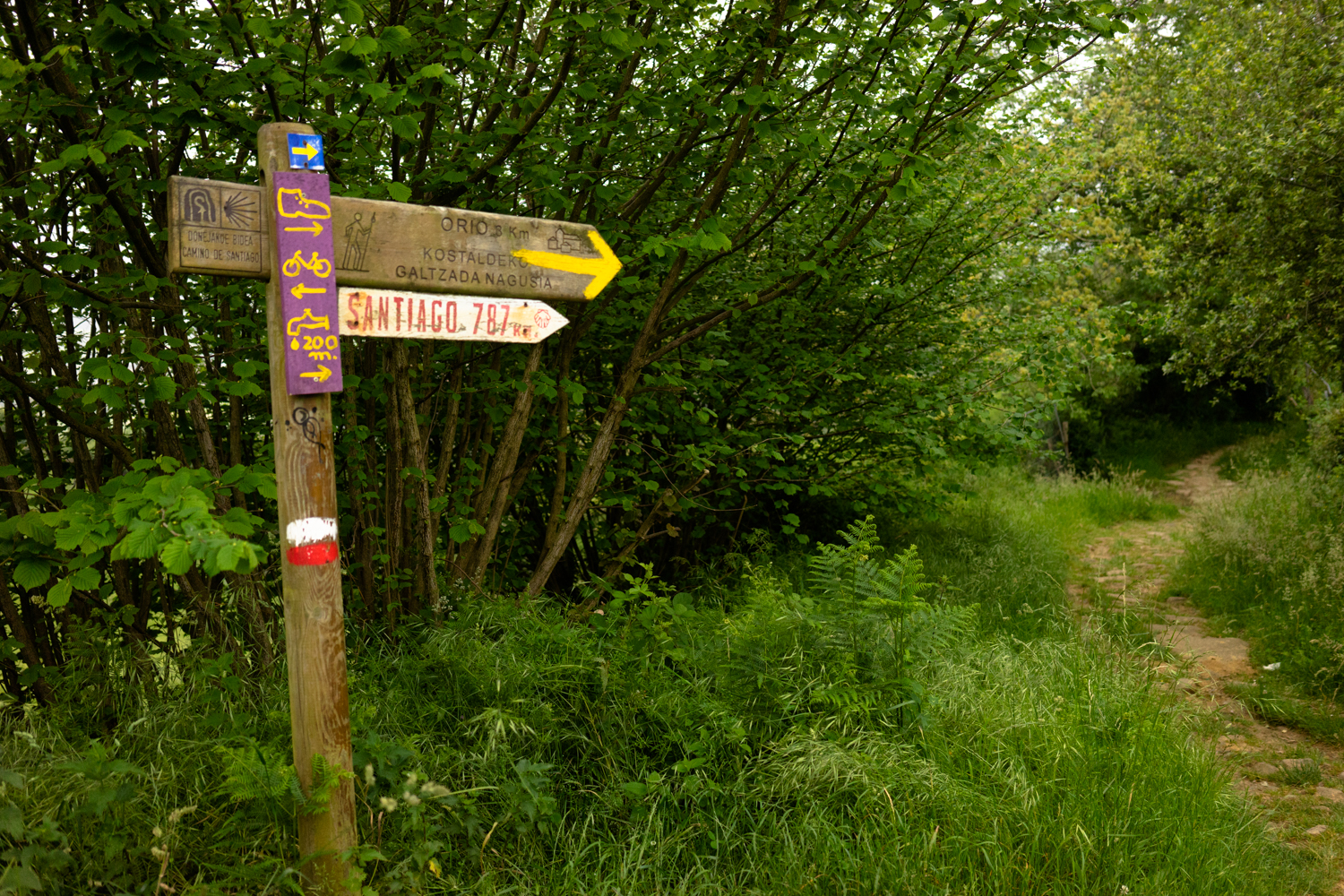
Even the long-distance route is well signposted, except for a few more remote sections nearer Santander. The sign is made up of white and red stripes similar to the Czech markings, plus there is a cross at every possible turn to make it clear that this is not the way to go! How many times have I said to myself, „Yep, a cross“.
Transport in Spain
If you need to be transported, you will find different types of carriers depending on the region. I found it useful to find connections via google maps (in the route planner), Omio or Rome2rio. ALSA has good connections, but the ticket is always realistically more expensive than what you see when you search. A cheaper option is to buy with a ticket at the station. You can find trains via Renfe.
Rituals
Throughout my wanderings, especially during the solitary first half, I developed a series of rituals to start and end my days and give them a nice order. They were not rituals in the true sense of the word, but rather a series of steps that I could do without thinking.
I got up around six in the morning, changed into my hiking clothes, brushed my teeth, packed my sleeping bag, pulled down my tarp, and organized everything in my pack according to weight. I found a nice place for breakfast and worked out before starting my hike.
After each major climb, I took a break for cookie time, and when I was hungry for something more substantial, I found a scenic spot and cooked myself lunch.
In the evening, I changed my socks (a symbol that the walking was over for the day), wrote in my journal, ate dinner, brushed my teeth, and set up my tarp before dark. If I slept at the church, I waited until dark, then set up my mattress and sleeping bag and hit the road.
The company of others
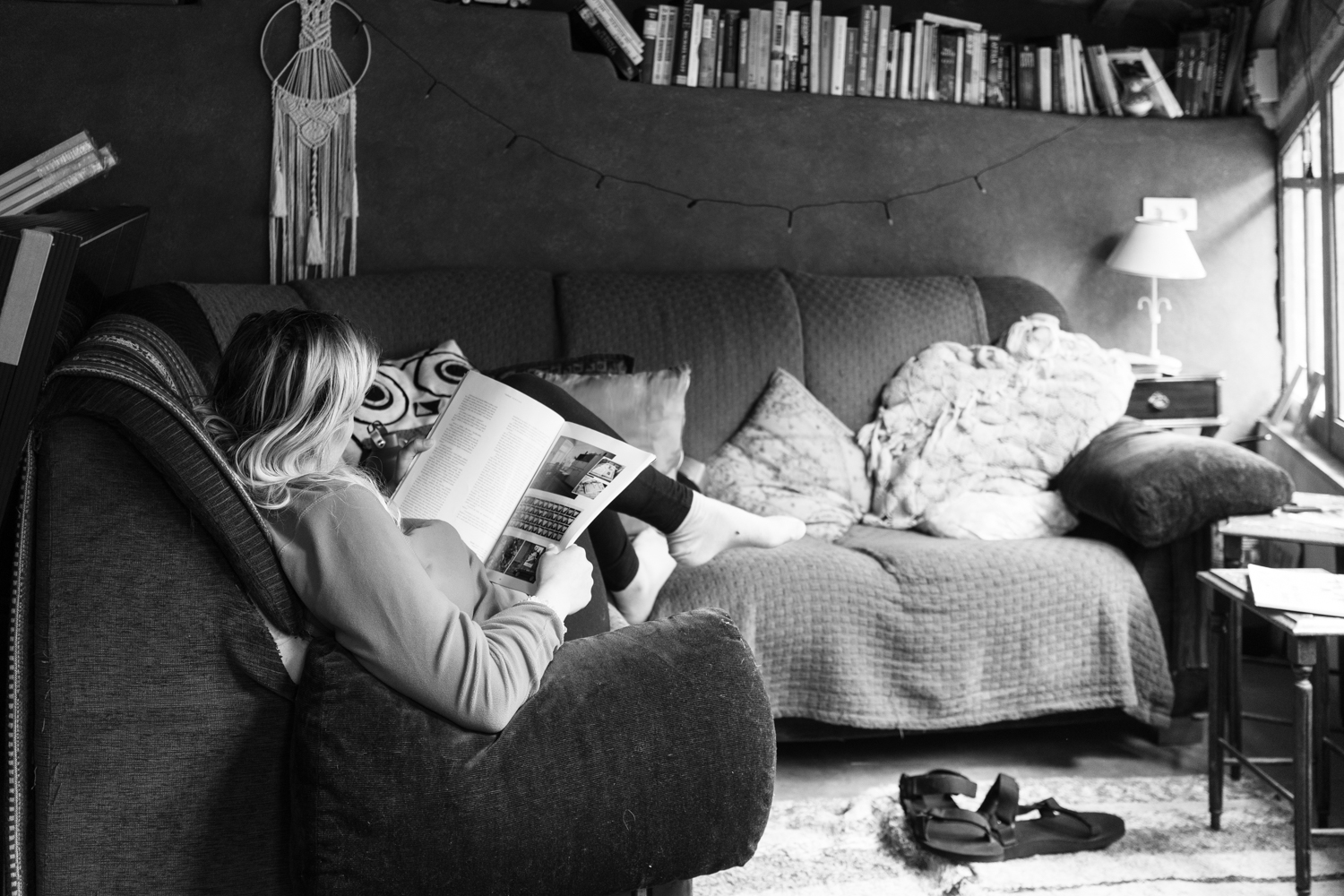
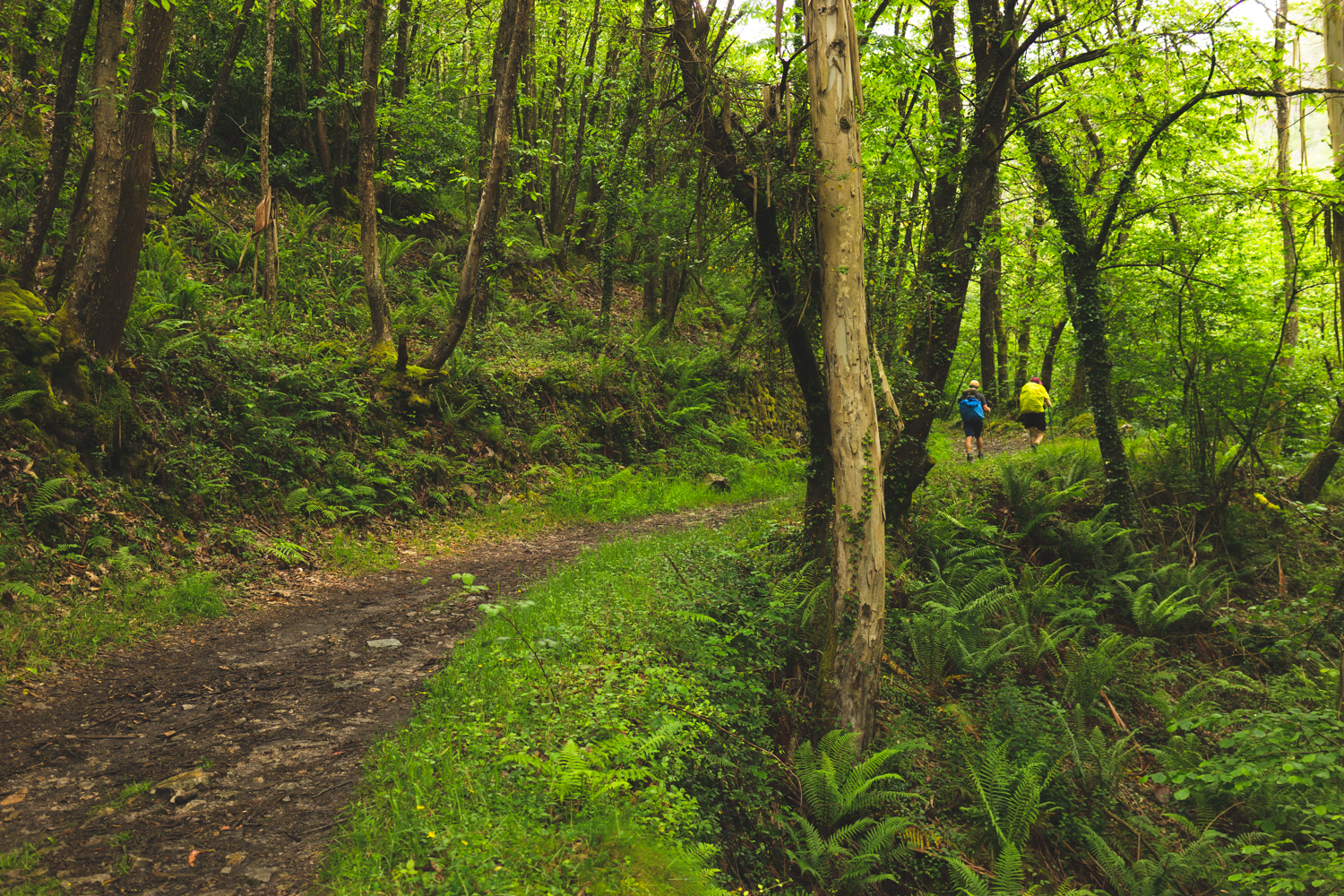
Meeting, bonding, leaving, being alone but not lonely, deep conversations and small talk. I would like to write about people separately, because the relationships as they smoothly emerge, deepen and fade away have been very engaging for me, and at the same time the experience is personal and purely individual. Perhaps just one thing: on a camino you can always walk alone and you can always walk in company, you can ask practically anything and share practically anything, you can be curious.
Do you feel like I missed something? Would you like to ask something specific? Feel free to email me at esterdobiasova@gmail.com or here in the comments, maybe it will help others. There is also a FB group for women travelers called Camino del Norte Group for Women.


Co na srdci, to v prstech